


What Your Competitors Know About Customer Psychology That You Don’t

November 10, 2026

What Your Competitors Know About Customer Psychology That You Don’t
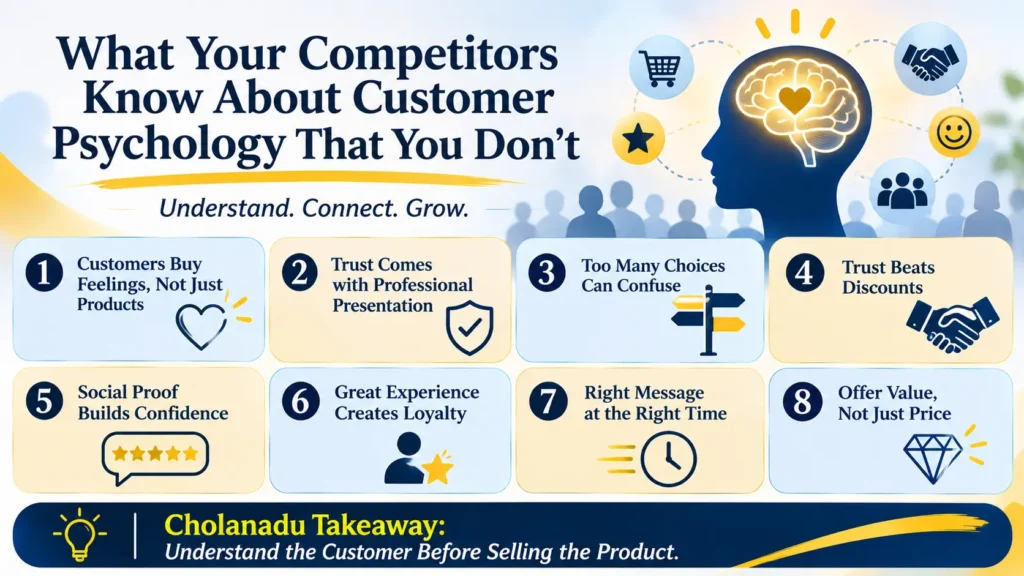
Have you ever wondered why customers choose your competitor even when your product is equally good, your pricing is competitive and your service is reliable?

The answer may not be your product. It could be your customer psychology strategy.

Successful businesses understand that customers do not always make purchasing decisions based on price, quality or features alone. Their emotions, perceptions, trust and buying experiences also influence what they choose within your customer psychology strategy.

Your competitors may already understand these hidden buying triggers and use a customer psychology strategy to attract more customers.

1. Customers Buy Feelings, Not Just Products

One of the biggest marketing mistakes is focusing only on product features without implementing a clear customer psychology strategy. Customers may appreciate technical details, but emotions often influence their final decisions in any customer psychology strategy.

For example:

  1. A skincare brand sells confidence, not just moisturiser.

  2. A luxury watch brand sells status, not just timekeeping.

  3. A travel company sells experiences, not just hotel bookings.

  4. A fitness brand sells self-improvement, not just gym equipment.

Successful brands understand the emotion behind the purchase using a customer psychology strategy. The question is not just what your product does. It is how your product makes customers feel.

2. Customers Trust What Looks Professional

Imagine two businesses selling similar products.

One has professional packaging, attractive product photography, a well-designed website and consistent branding driven by a customer psychology strategy.

The other has unclear visuals, inconsistent colours and ordinary product presentation without a defined customer psychology strategy.

Which one creates a stronger first impression? Most customers are likely to feel more confident about the professionally presented brand, although good design alone cannot guarantee product quality.

This is called the perception of value in a customer psychology strategy. Customers often use visual presentation as an initial signal when judging a business. To explore professional design standards and brand frameworks, review resources from the AIGA Design Association
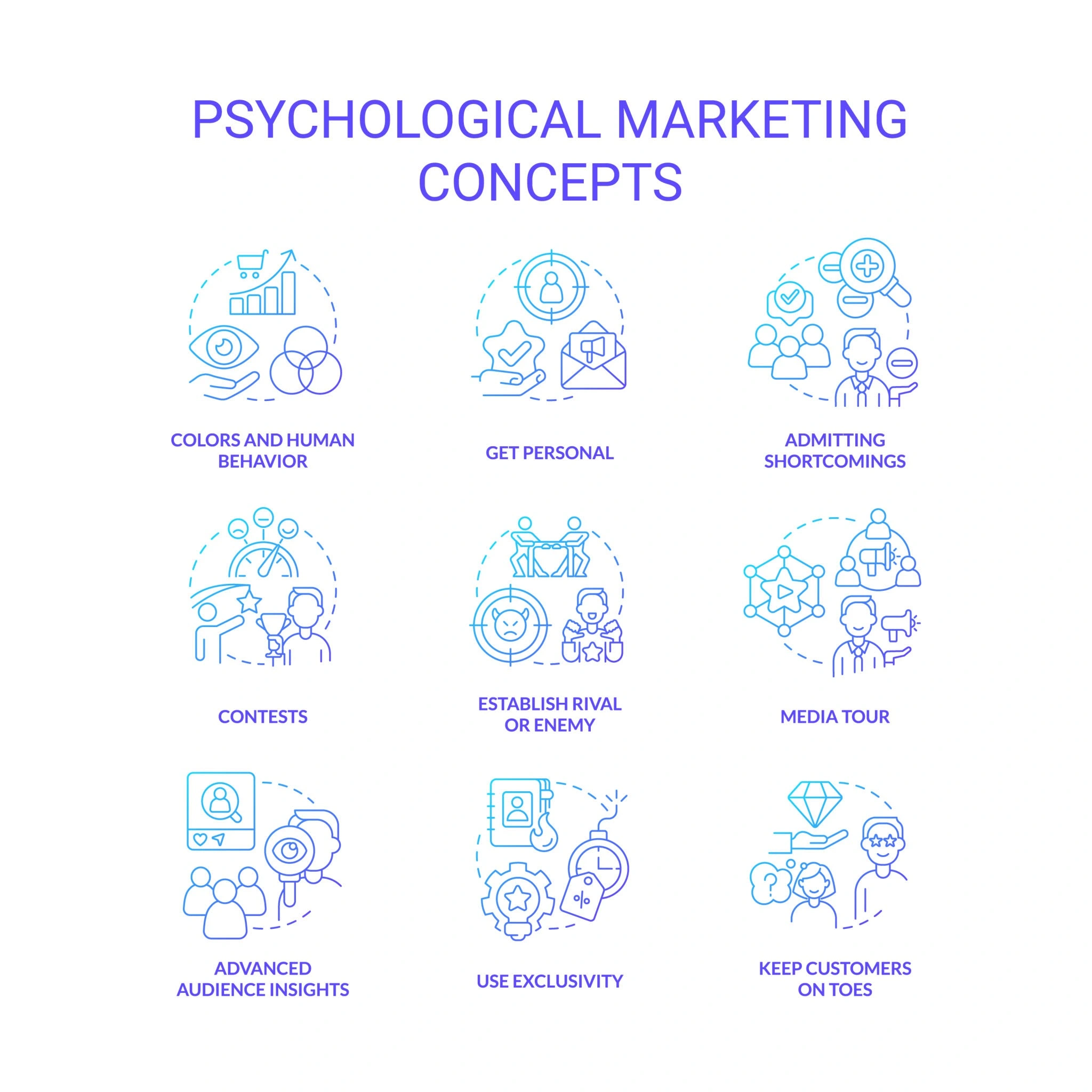
customer psychology strategy

Your competitors may be investing in:

  1. Professional product photography.

  2. Consistent brand identity.

  3. Premium packaging.

  4. Clear website design.

  5. High-quality advertisements.

A strong visual identity helps customers take your business seriously under your customer psychology strategy.

3. Too Many Choices Can Stop Customers from Buying

Offering more products does not always mean generating more sales when your customer psychology strategy is unorganized. When customers face too many similar options, they may feel confused and postpone their decision.

This is commonly associated with choice overload in a customer psychology strategy. For example, imagine an online store displaying 30 similar moisturisers without explaining their differences.

Customers may struggle to decide which product suits them. Smart brands simplify the buying process through a customer psychology strategy:

  1. Clear product categories.

  2. Easy-to-understand descriptions.

  3. Recommended product selections.

  4. Comparison guides.

  5. Simple pricing and offers.

The easier you make the decision, the easier it becomes for customers to move towards a purchase.

4. Trust Is More Powerful Than Discounts

Many businesses believe that offering bigger discounts is the fastest way to attract customers, ignoring the long-term benefit of a customer psychology strategy.

But constant discounting can reduce perceived value and encourage customers to wait for the next offer.

Successful brands understand that trust can be a stronger long-term advantage inside their customer psychology strategy.

Customers look for signals such as:

  1. Genuine customer reviews.

  2. Transparent product information.

  3. Clear return policies.

  4. Reliable customer support.

  5. Consistent product quality.

  6. Authentic brand communication.

A customer who trusts your business may choose it even when another competitor offers a slightly lower price because your customer psychology strategy works.

5. Social Proof Influences Buying Decisions

Before purchasing an unfamiliar product, many customers want to know what other people think about it, making social proof a key element of a customer psychology strategy.

They read reviews, watch demonstrations and look for recommendations. This is known as social proof.

For example, a customer may hesitate to buy a new skincare product. But after seeing genuine reviews and real product experiences, they may feel more confident due to your customer psychology strategy.

Brands use social proof through:

  1. Customer testimonials.

  2. Product demonstration videos.

  3. Genuine online reviews.

  4. User-generated content.

  5. Relevant influencer collaborations.

  6. Customer success stories.

However, authenticity matters. Fake reviews and exaggerated claims can damage trust rather than build it in your customer psychology strategy.

6. Customers Remember Experiences More Than Advertisements

An attractive advertisement may bring customers to your business, but their actual experience determines whether they return as part of your customer psychology strategy.

Consider an online customer who discovers your brand through Instagram.

The advertisement looks impressive, but the website loads slowly, product details are unclear and customer support does not respond.

The customer may leave without purchasing. Your competitors may be focusing on the entire customer journey through a customer psychology strategy:

  1. Discovering the brand.

  2. Exploring the product.

  3. Comparing available options.

  4. Making the purchase.

  5. Receiving the product or service.

  6. Getting post-purchase support.

Every interaction influences how customers perceive your business in your customer psychology strategy. A great advertisement creates interest. A great customer experience creates loyalty.

7. The Right Message at the Right Time Can Win Customers

Not every customer is ready to purchase immediately. Some are discovering your brand for the first time. Others are comparing competitors, while some are already planning to buy under your customer psychology strategy.

Successful marketers understand these different stages and adjust their communication accordingly using a customer psychology strategy.

Instead of showing the same advertisement repeatedly, businesses can create relevant content for different customer needs.

This makes marketing more meaningful and effective through a solid customer psychology strategy.

8. Your Competitors Are Selling Value, Not Just Price

Why do customers sometimes pay more for a product when cheaper alternatives are available? Because price is only one part of perceived value in a customer psychology strategy.

Customers may consider:

  1. Product quality.

  2. Brand reputation.

  3. Convenience.

  4. Packaging and presentation.

  5. Customer service.

  6. Reliability.

  7. Emotional connection.

For example, two businesses may sell similar products, but the one offering better presentation, clearer communication and a more reliable experience may justify a higher price with a customer psychology strategy.

Your business should not compete only by reducing prices. It should communicate why its offering is worth choosing through a refined customer psychology strategy.

The Cholanadu Perspective: Understand the Customer Before Selling the Product

Your competitors may not necessarily have better products or bigger budgets. They may simply understand their customers better through an effective customer psychology strategy.

They know what builds trust, what attracts attention, what creates desire and what makes people choose one brand over another in their customer psychology strategy.

For businesses looking to grow, understanding customer psychology should be a fundamental part of branding and marketing.

Start by asking yourself:

  1. What does my customer really want?

  2. Why should they choose my brand?

  3. What makes them trust my business?

  4. What could prevent them from purchasing?

  5. What experience will make them return?

At Cholanadu, we believe that powerful branding begins with understanding people, not just promoting products. To learn more about how strategic brand frameworks boost your business, read our guide on Cholanadu Brand Strategy Services.

Because the brands that truly understand their customers through a customer psychology strategy are the ones that stay ahead in the market.

Leave A Comment