


The Hidden Danger of Changing Your Logo Without a Real Rebrand Strategy
Table of Contents
ToggleLogo Rebrand Strategy: 6 Powerful Secrets to Stop Brand Failure
The Hidden Danger of Changing Your Logo Without a Real Rebrand Strategy
A new logo. Fresh colours. Modern typography. A completely different look.
For many business owners, changing a logo feels like the easiest way to make a brand look more premium and professional.
But here is something important: A new logo does not automatically create a stronger brand without a clear logo rebrand strategy.
In fact, changing your logo without understanding why your brand needs a transformation can create more problems than opportunities if you ignore a proper logo rebrand strategy.
Customers may no longer recognise your business. Your brand identity may become inconsistent, and years of recognition can slowly disappear.
So, what is the hidden danger of changing a logo without a real logo rebrand strategy?
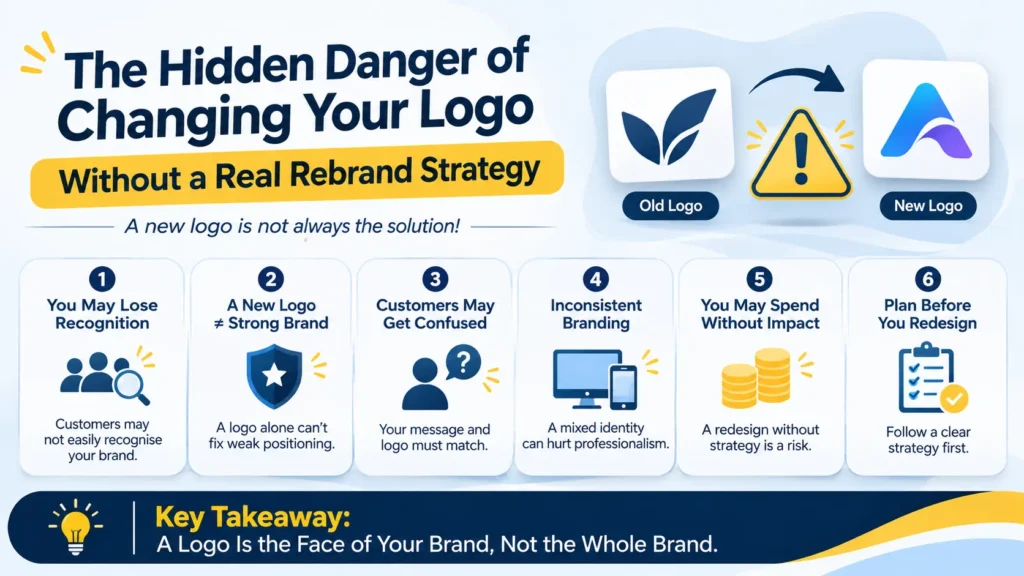
1. You May Lose the Recognition You Already Built
Think about established brands. Customers often recognise them through familiar colours, symbols, typography and visual elements shaped by their logo rebrand strategy.
These elements create brand recognition over time.
When a business suddenly changes its logo without considering its existing identity or establishing a logo rebrand strategy, customers may struggle to connect the new design with the company they already know.
This can lead to:
Reduced brand recognition.
Confusion among existing customers.
Loss of visual familiarity.
Difficulty establishing the new identity.
A successful logo redesign should evolve brand recognition through a disciplined logo rebrand strategy, not destroy it.
2. A Beautiful Logo Cannot Fix a Weak Brand Position
Imagine a local business struggling to attract premium customers without a clear logo rebrand strategy.
The owner decides to change the logo, introduce gold colours and use elegant typography.
The result looks expensive, but the business still has unclear messaging, inconsistent customer service and no unique selling point due to a missing logo rebrand strategy.
Has the brand really improved?
Not necessarily.
A logo can improve visual presentation, but it cannot independently solve problems related to:
Poor market positioning.
Unclear brand messaging.
Weak differentiation.
Incorrect target audience.
Inconsistent customer experience.
A brand needs a clear identity, purpose, and logo rebrand strategy before its visual appearance is redesigned. To review industry guidelines and design framework standards, explore resources from the AIGA Design Association
3. Customers May Not Understand What Your Business Stands For
Every successful brand communicates a clear message backed by a solid logo rebrand strategy.
Customers should understand what the business offers, whom it serves and why they should choose it. When businesses change their logos without reviewing their overall communication via a logo rebrand strategy, they often create a mismatch between appearance and message.
For example: A company known for affordable, family-friendly products suddenly adopts an ultra-luxury visual identity without changing its positioning, customer experience, or logo rebrand strategy.
Customers may begin questioning whether the business has changed its products, pricing or direction. Your visual identity and brand message must tell the same story inside your logo rebrand strategy.
4. Inconsistent Branding Can Damage Professionalism
A logo change affects more than your website when managing a logo rebrand strategy.
It may need to be updated across:
Product packaging.
Business cards and stationery.
Social media profiles.
Website and mobile applications.
Advertisements and brochures.
Store signage and uniforms.
Without a proper logo rebrand strategy rollout plan, businesses often end up using old and new logos simultaneously.
This creates an inconsistent appearance and can make even a well-established company look unorganised.
A proper rebrand includes a comprehensive logo rebrand strategy with brand guidelines that explain how every visual element should be used.
5. You May Spend Money Without Solving the Real Problem
Logo redesigns involve costs. But the bigger financial risk is investing in a design that does not address the actual business challenge through a structured logo rebrand strategy.
Imagine spending money on a new logo, packaging, signboards and digital advertisements, only to discover that customers are still choosing competitors because you skipped a logo rebrand strategy.
Why? Because the real issue may have been product positioning, pricing, communication or customer experience.
Before investing in a redesign, businesses should use a logo rebrand strategy to identify the problem they are trying to solve.
Good branding is not about spending more. It is about making the right decisions within your logo rebrand strategy.
6. What Should Happen Before Changing Your Logo?
A logo should be one part of a larger branding decision governed by a logo rebrand strategy.
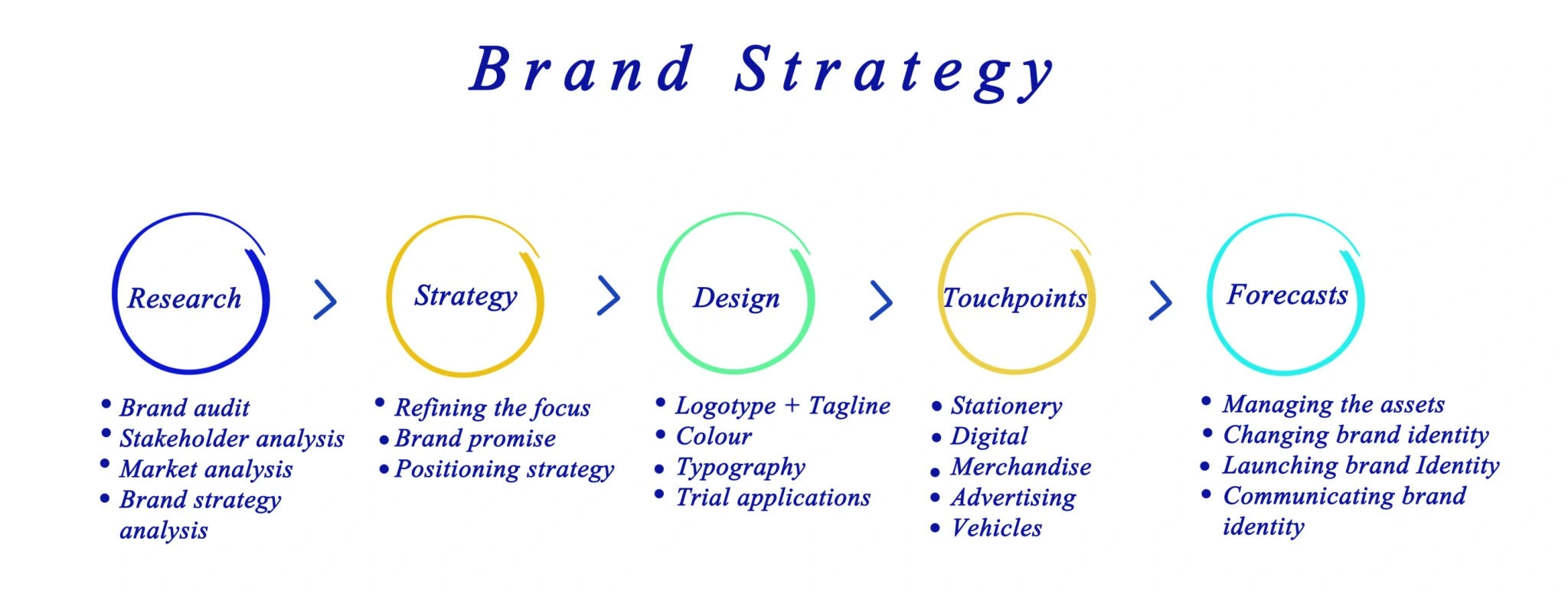
Before redesigning it, businesses should follow these essential steps:
Step 1: Conduct a Brand Audit
Understand how customers currently perceive your business and identify weaknesses in your existing identity before deploying a logo rebrand strategy.
Step 2: Study Your Target Audience
Understand customer expectations, buying behaviour and what makes them trust your brand.
Step 3: Analyse Your Competitors
Identify how competing brands position themselves and discover opportunities to stand apart using your logo rebrand strategy.
Step 4: Define Your Brand Positioning
Establish your brand purpose, values, personality, unique selling proposition and market direction inside your logo rebrand strategy.
Step 5: Develop the Visual Identity
Only after the strategy is clear should designers work on the logo, colours, typography and other visual elements under the logo rebrand strategy.
Step 6: Plan the Rebranding Launch
Introduce the new identity consistently across every customer touchpoint and communicate the reason for the change.
The Cholanadu Perspective: A Logo Is the Face of Your Brand, Not the Whole Brand
Changing a logo may give your business a fresh appearance, but a successful brand transformation requires much more than visual changes without a logo rebrand strategy.
It needs research, clear positioning, customer understanding, consistent communication and a well-planned logo rebrand strategy implementation.
Remember, customers do not build relationships with logos alone. They connect with the values, experiences and promises represented by those logos and your overall logo rebrand strategy.
Before asking your designer to create something new, ask yourself one important question:Are you changing how your brand looks, or are you improving what your brand stands for through a logo rebrand strategy?
At Cholanadu, we believe that great branding begins with strategy, not decoration. To see how our team develops comprehensive growth roadmaps, explore our guide on Cholanadu Brand Strategy Services.
Because a powerful brand built with a clear logo rebrand strategy is not simply recognised by its logo. It is remembered for what it represents.
