


Traditional Advertising vs. Digital Brand Activation: Where Should You Spend?
Table of Contents
Toggle5 Powerful Brand Activation Tips to Beat Traditional Ads in 2026
Brand activation is the ultimate key to transforming modern marketing. For decades, advertising meant newspapers, television, radio, billboards and print campaigns.
Today, a brand can reach thousands of people through an Instagram Reel, a YouTube video, a Google search, an influencer collaboration or an interactive digital campaign often with measurable results in real time.
So, where should a modern business invest?
Traditional advertising or digital brand activation?
The answer is not simply “digital is better.” The smarter question is: What does your brand need to achieve and which medium can achieve it most effectively?
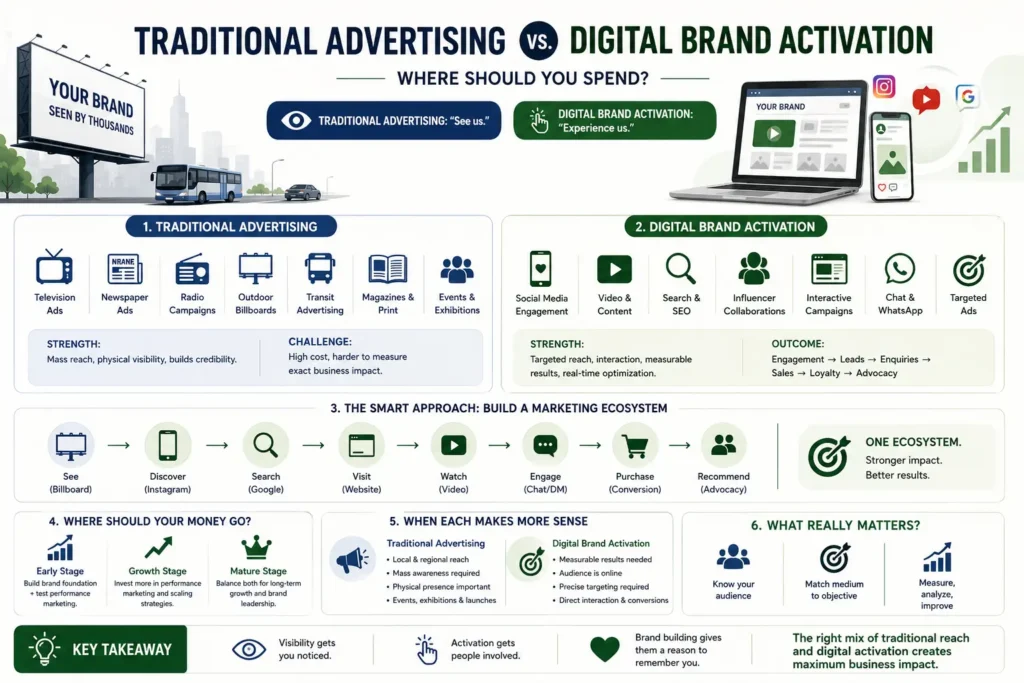
The Real Difference: Advertising vs. Activation
Traditional advertising primarily focuses on visibility and awareness.
A billboard puts your brand in front of commuters. A newspaper advertisement creates local visibility. A television commercial can build mass recognition.
Digital brand activation goes a step further. It encourages people to interact, participate, respond, share, click, enquire or purchase.
Think of it this way:
Traditional Advertising — “See us.”
Digital Brand Activation — “Experience us.”
This difference can significantly influence where your marketing budget should go.
1. Traditional Advertising: The Power of Physical Visibility
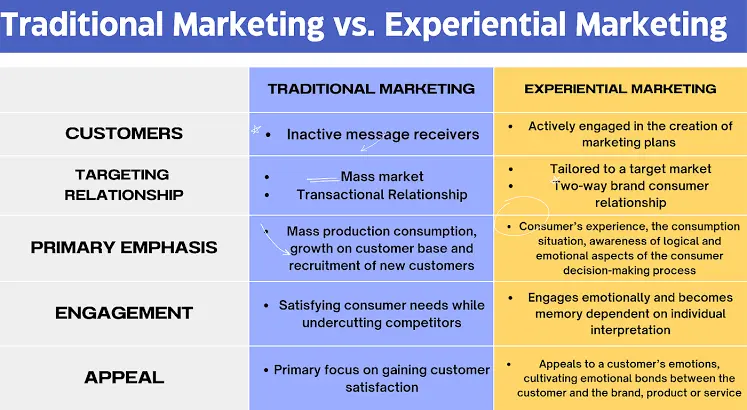
Traditional media still has an important place in brand building.
Common formats include:
- Television advertisements
- Newspaper advertisements
- Radio campaigns
- Outdoor billboards
- Bus and transit advertising
- Magazine advertisements
- Brochures and printed materials
- Event and exhibition branding
One of its biggest advantages is physical and mass visibility.
A strategically placed billboard can create repeated exposure among thousands of commuters. A newspaper advertisement can establish credibility within a particular geographic market. A television commercial can create emotional storytelling at scale.
But there is a challenge.
Traditional advertising can be expensive, and measuring exactly how many people moved from seeing the advertisement → engaging with the brand → making a purchase can be difficult.
You may know your advertisement was seen. But do you know exactly what it generated?
That is where digital brand activation becomes increasingly attractive.
2. Digital Brand Activation: Turning Attention Into Action
Digital brand activation is designed around participation and measurable engagement. Instead of simply displaying a message, brands can create experiences that invite audiences to respond.
For example, take a skincare brand. Instead of simply placing a newspaper advertisement saying: “Natural skincare for healthy skin.”
A digital brand activation campaign could invite consumers to: Take a 30-second skin quiz → receive personalised recommendations → explore products → claim an introductory offer.
Now the audience isn’t simply seeing the brand. They are interacting with it through brand activation. That interaction creates valuable marketing data and a clearer customer journey.
3. The Biggest Advantage of Digital: Measurability
One of the strongest reasons brands move budgets toward digital marketing is trackability. Digital brand activation campaigns can provide insights such as:
Impressions
Reach
Video views
Engagement rate
Website visits
Click-through rate
Leads
Enquiries
Add-to-cart activity
Purchases
Customer acquisition cost
Return on advertising spend
Check detailed analytical guidelines on Google Analytics to track engagement. This allows marketers to ask a much more valuable question: “What did our marketing investment actually produce?”
Instead of simply measuring exposure, businesses can analyse the journey from attention to action with brand activation.
4. Traditional Advertising Still Has One Major Strength
Digital should not make us forget the value of traditional media. Mass credibility and physical presence still matter.
Consider a local business launching a major outlet. A combination of: Outdoor billboard + newspaper visibility + digital campaign + Google presence + social media may create a stronger market impact than relying exclusively on one channel.
Traditional media can make a brand feel established, visible and legitimate. Digital brand activation can then make that attention interactive and measurable.
That combination can be extremely powerful.
5. Where Should Your Money Go?
Instead of asking: “Traditional or Digital?” Ask: “What stage of growth is my brand in?”
Your budget should reflect your business objective. The right brand activation mix depends on your audience, geography, industry and campaign objective.
6. The Smartest Approach: Build a Marketing Ecosystem
The most successful brands rarely think in isolated channels. They create an ecosystem.
Imagine a consumer sees your billboard on the way to work. Later that evening, the same person sees your Instagram Reel. They search your brand on Google. They visit your website. They watch a product video. They read customer reviews. Finally, they make a purchase.
Was it the billboard? Was it Instagram? Was it Google? Was it the website?
It was the ecosystem. Every touchpoint contributed to the decision. Discover more growth strategies in our Cholanadu Growth Section.
7. The 70:30 Question
There is no universal formula such as 70% digital and 30% traditional that works for every company. However, a useful approach is to divide your marketing budget according to purpose rather than platform.
Brand Building
Invest in activities that increase: Recognition → Trust → Recall → Authority
Demand Generation
Invest in activities that create: Interest → Leads → Enquiries → Sales
Brand Activation
Invest in brand activation activities that encourage: Interaction → Participation → Conversion → Advocacy
Your budget should move according to where your biggest business opportunity exists.
8. When Traditional Advertising Makes More Sense
Traditional advertising can be particularly effective when:
Your audience is geographically concentrated: For example, a local retailer, hospital, educational institution or real estate project may benefit from strong outdoor and local media visibility.
Your product requires mass awareness: Large consumer brands may use television, outdoor and print to establish widespread recognition.
Your brand needs physical presence: Retail launches, exhibitions, events and large-scale campaigns can benefit enormously from offline visibility before running a brand activation drive.
9. When Digital Brand Activation Makes More Sense
Digital brand activation becomes especially powerful when:
You need measurable results: You can monitor performance and optimize brand activation campaigns continuously using tools like Meta Ads Manager.
Your audience spends significant time online: Social media, search engines, video platforms and websites provide multiple opportunities for engagement.
You want precise targeting: Digital brand activation campaigns can target audiences based on factors such as location, interests, behaviour and search intent.
You want direct customer interaction: Comments, messages, forms, quizzes, landing pages and WhatsApp conversations can shorten the distance between a brand and its audience.
10. The Hidden Cost of Choosing the Wrong Medium
The biggest marketing expense isn’t always the amount you spend. Sometimes, it is spending money without strategic alignment.
Imagine investing ₹5 lakh in a campaign that generates tremendous visibility but almost no measurable business outcome. The campaign may look successful. The numbers may look impressive. But if it does not contribute to the business objective, the investment may have been poorly allocated.
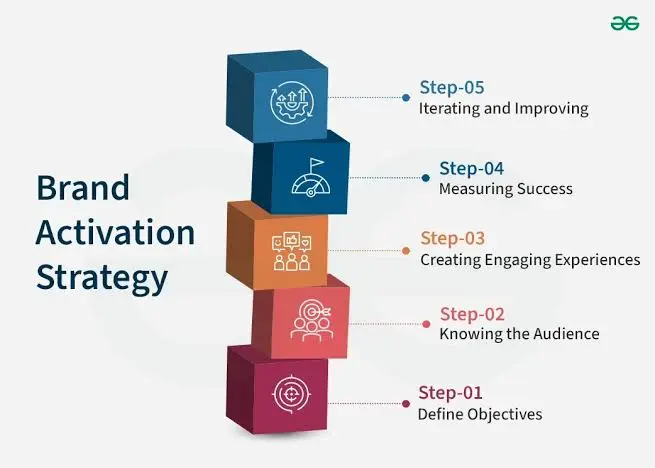
Marketing should therefore begin with: Objective → Audience → Message → Channel → Measurement
Not: Budget → Advertisement → Hope
11. A Better Question for Business Owners
Before approving your next marketing campaign, ask these five questions:
Who exactly are we trying to reach?
What do we want them to do?
Where does this audience consume information?
Can we measure the outcome of our brand activation?
What happens after they notice us?
That final question is often forgotten. An advertisement creates attention. A brand experience creates memory. A strong brand activation creates action.
The Future Is Not Traditional vs. Digital
The future belongs to brands that understand how to connect offline attention with online action.
A billboard can create curiosity. A social media brand activation campaign can create engagement. A website can provide information. A WhatsApp conversation can create trust. A strong customer experience can create loyalty.
Together, they create something far more valuable than an individual advertisement: Brand Momentum.
Cholanadu Takeaway
Traditional advertising is not dead. Digital advertising is not automatically superior. The winning strategy is the one that matches the medium to the objective.
If your goal is mass visibility, traditional media can be powerful.
If your goal is targeted engagement and measurable conversion, digital brand activation can be highly effective.
If your goal is long-term brand growth, the strongest strategy may be an intelligently integrated combination of both.
Because the real question isn’t: “Where should we spend our money?” It is: “Where can our brand activation investment create the greatest business impact?”
Visibility gets you noticed. Brand activation gets people involved. Brand building gives them a reason to remember you.
