


The 1985 New Coke Disaster: Why Ignoring Consumer Psychology Ruins a Redesign
September 2, 2026

Understanding consumer psychology is essential when attempting any major brand shift, as proven by one of the most famous marketing missteps in history.

What happens when a brand redesign looks better on paper but feels wrong to the people who built an emotional connection with it? In 1985, Coca-Cola discovered the answer.

The launch of New Coke remains one of the most famous lessons in branding history. It was not simply a product failure. It was a powerful demonstration of how consumer psychology, emotional attachment, familiarity, and brand identity can outweigh rational product improvements. And the lesson remains highly relevant today.

The Redesign That Was Supposed to Win

By the early 1980s, Coca-Cola was facing increasing competition from Pepsi. Blind taste tests suggested that consumers often preferred Pepsi’s sweeter flavour. Coca-Cola responded with an ambitious solution: Change the formula.

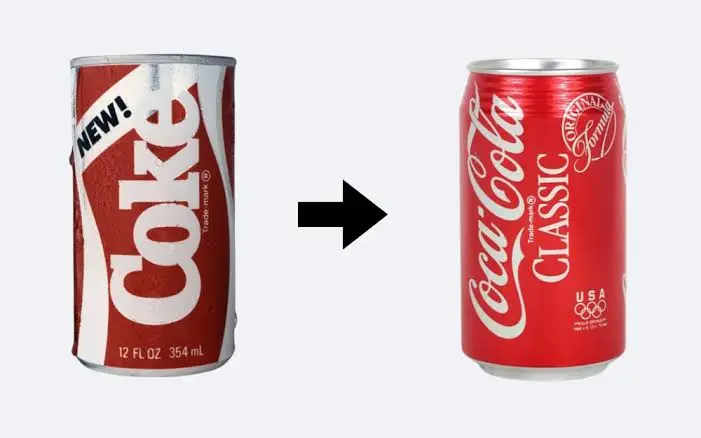
After extensive research and testing, the company introduced a sweeter formulation called New Coke on April 23, 1985.

From a traditional product-development perspective, the decision seemed logical.

  • More taste tests.

  • More research.

  • A competitive response.

  • A product designed around consumer preference.

Yet something was missing.

The emotional relationship between consumers and the original Coca-Cola—a key element of consumer psychology that no test could capture.

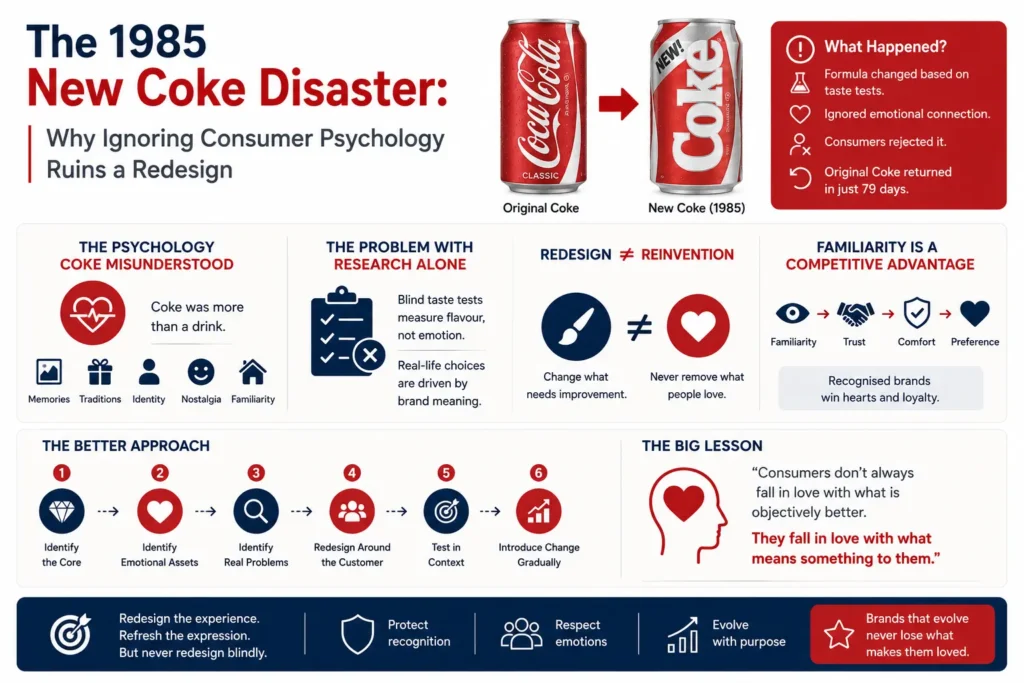
The Psychology Coca-Cola Misunderstood

Consumers don’t always choose brands based on rational comparisons. They choose them based on memories, familiarity, identity and emotion. A deep study of consumer psychology shows that emotional resonance always overrides features.

For many people, Coca-Cola wasn’t merely a beverage.

It represented:

  • Childhood memories

  • Family occasions

  • Celebrations

  • Christmas traditions

  • Restaurants and holidays

  • American cultural identity

  • Familiarity and nostalgia

So when Coca-Cola changed its formula, consumers didn’t necessarily perceive it as:

“A better-tasting Coke.” Many perceived it as: “They took away my Coke.” That distinction changed everything.

The Problem With Relying Too Heavily on Research

Coca-Cola had conducted extensive consumer research before launching New Coke. So why did the research fail to predict the backlash?

Because what consumers say they prefer in a test environment isn’t always the same as what they value in real life. Understanding this discrepancy is fundamental to consumer psychology.

A blind taste test removes the very elements that make a brand powerful:

  • The name.

  • The packaging.

  • The memories.

  • The familiarity.

  • The symbolism.

  • The emotional context.

When consumers tasted Coke without knowing what it represented, flavour became the primary consideration. You can review broader research methodologies on Harvard Business Review to see how qualitative behavior contrasts with laboratory testing.

But in the real world, consumers weren’t simply buying flavour. They were buying Coca-Cola.
consumer psychology

Redesign ≠ Reinvention

This is where modern brands can learn from New Coke through the lens of consumer psychology. A redesign should not automatically mean changing everything.

Before changing a product, logo, packaging, website, or visual identity, brands should ask:

What are we changing and what are customers emotionally attached to?

Some elements may appear outdated to a company but remain deeply valuable to its audience.

  • A familiar colour.

  • A distinctive logo.

  • A particular shape.

  • A packaging detail.

  • A brand name.

  • A tone of voice.

  • A ritual associated with using the product.

These can become brand assets, even when they aren’t obvious in conventional market research.

Familiarity Is a Competitive Advantage

One of the most underestimated forces in branding and consumer psychology is familiarity. People naturally develop preferences for things they recognise.

That recognition creates:

Familiarity → Trust → Comfort → Preference

This is why successful brands often evolve gradually rather than constantly reinventing themselves. A redesign that destroys recognition may force consumers to mentally relearn the brand.

And that creates unnecessary friction.

The Better Approach: Evolve, Don't Erase

The lesson isn’t that brands should never change. Quite the opposite.

Brands must evolve.

But evolution should protect the core emotional equity that made the brand valuable in the first place—a core rule in applied consumer psychology.

A smarter redesign process looks something like this:

01 Identify the Brand’s Core

What does the brand fundamentally stand for?

02 Identify Emotional Assets

Which elements do customers recognise, remember and love?

03 Identify Genuine Problems

What actually needs improvement?

04 Redesign Around the Customer

Don’t redesign merely because competitors look more modern.

05 Test in Context

Don’t rely exclusively on isolated preference tests. Test the complete experience brand, product, packaging, messaging and context.

06 Introduce Change Gradually

Give customers time to understand and accept significant changes.

Cholanadu Perspective

At Cholanadu, we believe great branding is not about making something look different. It’s about making it feel relevant without losing what makes it recognisable.

A brand can become more premium without becoming unfamiliar. A website can become more modern without losing its personality.

A logo can become cleaner without destroying recognition. A packaging system can become sophisticated without abandoning its heritage.

The goal is not change for the sake of change. The goal is meaningful evolution grounded in proven consumer psychology. Explore our full range of strategic services at Cholanadu.

The New Coke story isn’t really about a failed formula. It’s about a fundamental truth of branding:

Consumers don’t always fall in love with what is objectively better. They fall in love with what means something to them. That is why successful redesigns require more than aesthetics.

They require consumer psychology, strategy, research, empathy and restraint.

Because sometimes, the most valuable part of a brand is the very thing a redesign team is tempted to remove.

Redesign the experience. Refresh the expression. But never redesign blindly.

Because when you change what people love, “better” can quickly become “wrong.”

Cholanadu — Building brands that evolve without losing their identity.

Leave A Comment