


What Makes a 30-Second Commercial Go Viral While Others Get Ignored?
Table of Contents
ToggleViral Video Advertising: 7 Powerful Secrets to Win Attention
What Makes a 30-Second Commercial Go Viral While Others Get Ignored?
The Psychology, Creativity, and Branding Strategy Behind Advertisements People Remember
Imagine spending lakhs producing a 30-second commercial. The visuals are polished, the actors are talented, and the product looks exceptional. Yet, after launch, the advertisement receives little attention.
Now imagine another brand creating a simple 30-second video that reaches millions of viewers, sparks conversations, and becomes the talk of social media through effective viral video advertising.
What makes the difference? In today’s crowded digital landscape, an advertisement’s success depends on more than production quality. It depends on how effectively viral video advertising captures attention, creates an emotional connection, and gives people a reason to remember and share it.
For businesses, understanding the core principles of viral video advertising can transform how they approach advertising, video production, and brand communication.
Let’s explore what separates memorable commercials from those viewers forget within seconds through smart viral video advertising.
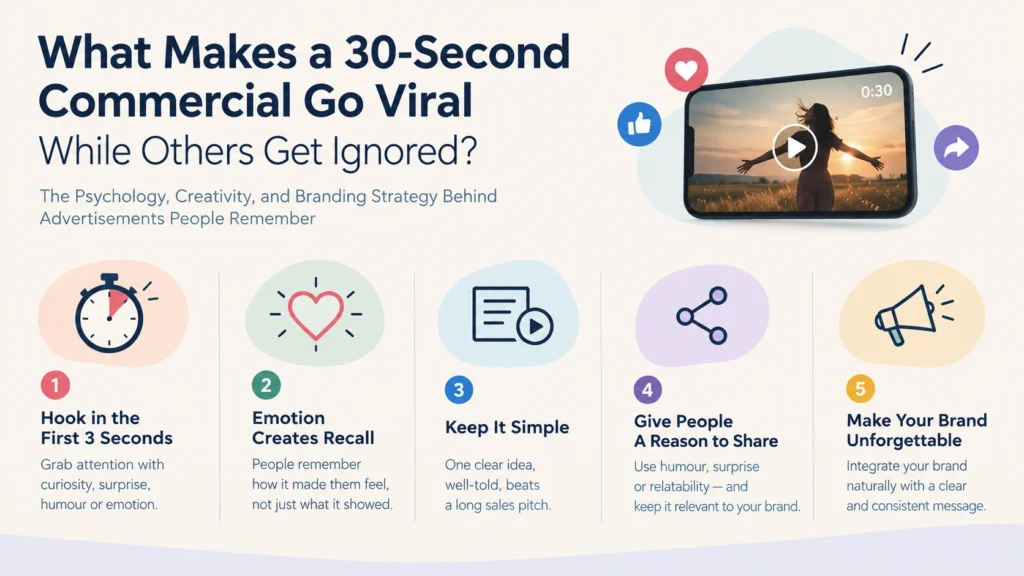
1. The First Three Seconds Decide Whether People Keep Watching
Audiences scroll through social media quickly. If an advertisement fails to create immediate interest, viewers may move on before understanding its message.
This makes the opening moments of viral video advertising particularly important. Successful commercials often begin with something that makes people curious, surprised, amused, or emotionally engaged.
For example, a skincare advertisement might open with an unexpected question about a familiar skincare mistake. A food brand might begin with an irresistible close-up of a freshly prepared dish. A technology company might demonstrate a frustrating everyday problem before revealing its solution.
Each approach gives viewers a reason to continue watching.
However, grabbing attention is only the beginning. The opening must connect naturally with the rest of the advertisement. The goal is not simply to stop the scroll. It is to make people want to see what happens next in successful viral video advertising.
2. Emotion Makes Advertisements More Memorable
People do not always remember advertisements because of the products they feature. Often, they remember how those advertisements made them feel, which is a core pillar of viral video advertising. Humour, nostalgia, excitement, surprise, inspiration, and empathy can all help create memorable experiences.
Consider an advertisement showing a parent preparing a child’s favourite meal before an important school day. The commercial may promote a food product, but its emotional appeal comes from the care, anticipation, and familiarity surrounding the moment.
Similarly, a humorous advertisement can make a brand memorable by turning an ordinary situation into something unexpectedly entertaining.
The important principle in viral video advertising is relevance. The emotion should connect with the brand, its audience, and the message being communicated. To review professional creative standards and advertising frameworks, you can explore guidelines from the AIGA Design Association.
A commercial becomes more powerful when people connect with its story rather than simply observe its product.
3. A Simple Story Beats a Complicated Sales Pitch
A 30-second commercial has limited time to communicate its message. Trying to explain every feature, benefit, offer, and company achievement can overwhelm viewers.
Instead, a strong campaign focused on viral video advertising often focuses on one central idea. A useful storytelling structure is:
The Hook: Introduce a question, problem, or surprising moment.
The Connection: Show a situation the audience recognises or cares about.
The Resolution: Reveal how the product or brand fits into the story.
The Brand Message: Leave viewers with one clear takeaway.
For example, an advertisement for a home-cleaning product might show someone struggling to remove a stubborn stain just before guests arrive. The product then provides the solution, allowing the story to resolve naturally.
Rather than listing several product features, the commercial demonstrates one meaningful benefit. This narrative structure helps audiences understand the message without requiring lengthy explanations.
4. Why Unexpected Ideas Get Shared
Virality often begins when content gives viewers a reason to send it to someone else. That reason might be humour, surprise, relatability, admiration, or a message worth discussing.
An advertisement that simply says a product is excellent may struggle to inspire conversation. An advertisement that presents a familiar problem in an unexpected way through viral video advertising may have a stronger chance of being shared.
For example, a brand could create a humorous commercial about the universal experience of searching for car keys moments before leaving home. If the story is entertaining and the product fits naturally into the solution, viewers may share it because the situation reminds them of friends or family members.
However, unexpected content must still support the brand’s message. A video might become popular because of an entertaining scene while leaving viewers unable to remember which company created it.
Attention creates an opportunity. Brand recognition turns that opportunity into marketing value.
5. The Brand Must Be Memorable, Not Just the Advertisement
One of the biggest challenges in commercial production and viral video advertising is ensuring that viewers remember the brand after watching the video.
A beautifully produced advertisement can attract millions of views without significantly improving brand awareness if the brand itself is barely visible or disconnected from the story.
Successful brand integration within viral video advertising should feel natural rather than forced. This can be achieved through:
A distinctive visual identity.
A recognisable brand voice.
A product that plays a meaningful role in the story.
Consistent colours, sounds, or other brand assets.
A clear and memorable closing message.
For example, a beverage commercial might use a recognisable colour palette and a distinctive serving ritual throughout the video, making the brand easier to identify.
The objective is not to interrupt the story with constant product promotion. It is to make the brand an essential part of the experience.
6. Production Quality Matters, but Authenticity Matters Too
High-quality cinematography, lighting, sound design, editing, and visual effects can make a commercial feel polished and professional. However, expensive production does not automatically produce effective advertising.
Some successful commercials rely on elaborate storytelling and cinematic visuals. Others succeed through simple concepts, relatable situations, and authentic performances.
The right production style depends on the brand’s personality, audience, budget, and campaign objective. A premium automobile advertisement may benefit from cinematic visuals that communicate craftsmanship and performance.
A youth-focused lifestyle brand might achieve stronger results with energetic editing and a conversational tone. A local business may find that a straightforward demonstration featuring real customers is more persuasive than an elaborate production.
Production should strengthen the idea, not compensate for the absence of one.
7. How Music, Editing, and Visuals Influence Attention
A 30-second commercial is a carefully coordinated experience. Music creates atmosphere. Editing controls pace. Visual composition directs attention. Sound effects can reinforce important moments.
When these elements work together, they can make an advertisement more engaging and easier to remember.
For example, a commercial might begin with quiet ambient sound, build tension through faster editing, and introduce a memorable musical cue when the product solves the problem.
However, excessive effects and rapid cuts can become distracting if they do not support the story. Every creative decision should have a purpose.
A useful question for commercial producers is: Does this visual, sound, or transition strengthen the message or is it simply making the video busier? Clarity and coherence are often more valuable than unnecessary complexity.
The Cholanadu Perspective: Thirty Seconds Can Capture Attention. A Strong Idea Can Make It Count.
In a world overflowing with content, businesses have only a limited opportunity to make a meaningful impression.
A successful commercial combines an engaging opening, a compelling story, emotional relevance, distinctive branding, and a clear message. But the most important lesson is that creativity must serve a purpose.
An advertisement should not merely entertain viewers. It should help them understand, recognise, or remember the brand behind the story.
At Cholanadu, we believe effective brand communication begins with a strong idea and a clear understanding of the audience. When strategy, storytelling, and visual execution work together, even a short commercial can create a lasting impression.
Because the difference between an advertisement people ignore and one they remember is rarely just its budget. It is the idea, the emotion, and the brand experience that those 30 seconds deliver. To explore how our comprehensive branding frameworks support business growth, view our guide on Cholanadu Brand Strategy Services.
Don’t just create an advertisement that people watch. Create one that gives them a reason to remember your brand.
