


Built to Last – What Makes a Company Truly Endure? Jim Collins and Jerry Porras

Why Some Companies Endure and Others Fade
Every business begins with a spark — an idea, a dream, a purpose.
But as time passes, most fade into the background, while a few evolve into timeless institutions that redefine industries.
Why do some companies thrive for generations while others vanish within a decade?
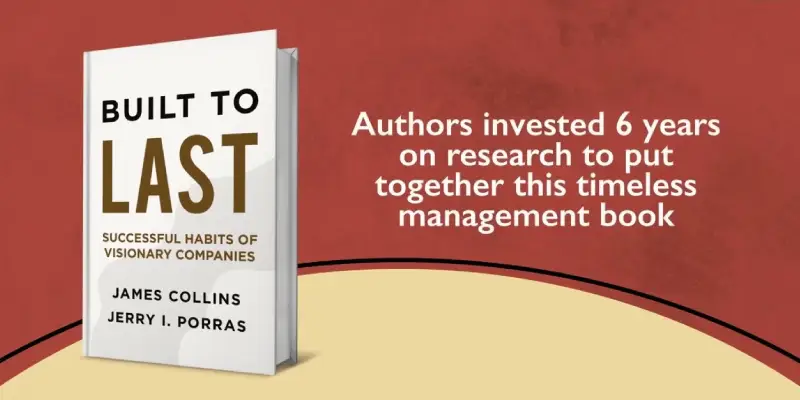
That’s exactly what Jim Collins and Jerry Porras explored in their classic book, Built to Last: Successful Habits of Visionary Companies.
Through extensive research, they studied 18 legendary organizations — including 3M, Disney, Johnson & Johnson, Hewlett-Packard, and Procter & Gamble — to uncover the principles behind business longevity, corporate resilience, and enduring success.
Let’s dive into the timeless lessons that every entrepreneur, leader, and brand builder can learn 👇
Be a Clock-Builder, Not a Time-Teller
Visionary founders don’t just build products — they build systems.
They create organizations that thrive even in their absence.
Jim Collins describes this as the difference between a time-teller and a clock-builder.
A time-teller knows the time; a clock-builder creates a mechanism that tells the time forever.
Key takeaway:
Don’t make yourself indispensable. Instead, build a structure, culture, and process that sustain themselves.
👉 Business longevity begins when a company no longer depends on one person.
Profit is a Result, Not a Purpose
In Built to Last, the authors found that visionary companies never prioritized profit above purpose.
They focused on making a difference first — and profit naturally followed.
Companies like Johnson & Johnson operate by core values that emphasize customer trust and social responsibility over short-term gains.
Lesson:
- When you chase meaning, money follows.
- When you chase money, purpose fades.
Purpose-led companies enjoy sustainable growth because they connect emotionally with customers and employees alike.
Preserve the Core, Stimulate Progress
The secret of enduring success lies in balance.
Preserve your core values, but continuously innovate your methods.
Think of Disney — their core has always been “creating happiness through entertainment.”
Yet, they’ve evolved from hand-drawn animation to streaming empires like Disney+.
✅ Tip:
Stay true to your “why,” but never stop reinventing your “how.”
That’s the heart of corporate resilience and market adaptability.
Set a BHAG — Big Hairy Audacious Goal
A BHAG is a bold, long-term vision that inspires action.
It’s not just a goal — it’s a movement.
SpaceX’s mission to make humans multi-planetary is a modern BHAG.
It motivates employees, attracts global attention, and drives innovation.
Action Step:
Set a goal so ambitious it scares you — then make your team believe it’s possible.
BHAGs create purpose, passion, and progress.
Build a Culture, Not a Crowd
- A company’s culture is its invisible engine.
- Visionary companies hire people who believe what they believe, not just who can do the job.
At Patagonia, for example, employees deeply connect with the brand’s environmental mission.
That’s organizational culture in action — a shared sense of purpose that outlasts trends.
🎯 Insight:
Culture isn’t managed by HR.
It’s embedded in every meeting, decision, and mindset.
When your culture is strong, corporate resilience becomes natural.
Try. Fail. Learn. Repeat.
- Innovation is never a straight path — it’s a loop of testing, failing, and improving.
- Visionary companies view failure as tuition fees for learning.
3M famously encourages employees to spend 15% of their time experimenting — that’s how Post-it Notes were born.
💡 Growth mindset:
Treat every experiment as an investment.
Each failure teaches you what doesn’t work — bringing you closer to what does.
Grow Leaders from Within
Visionary companies don’t rely on celebrity CEOs.
They develop leaders from within, ensuring continuity and shared DNA.
For example, Procter & Gamble promotes almost all senior leaders internally.
This builds loyalty, trust, and deep alignment with company values.
👥 Leadership vision principle:
Don’t just hire stars — develop them.
Your company’s next visionary might already be working for you.
Good Enough Never Is
Complacency kills longevity.
Visionary companies never see success as a finish line — only a checkpoint.
Toyota’s philosophy of continuous improvement (Kaizen) embodies this idea.
Even when they dominate markets, they still ask: “How can we be better?”
🧩 Mindset:
Every win is a new starting point — not a destination.
That’s the road to enduring success.
The Power of Corporate Resilience
In a world of change, only adaptable companies survive.
Corporate resilience means anticipating disruption — not fearing it.
During crises like COVID-19, resilient companies such as Apple, Netflix, and Unilever thrived by being agile, not reactive.
How to build it:
- Diversify operations
- Empower flexible teams
- Embrace technology early
Resilience is the armor of business longevity.
Innovation Strategy: Evolve or Evaporate
Innovation isn’t optional — it’s oxygen.
Companies that stop innovating start declining.
Kodak learned this lesson the hard way when they ignored digital photography.
Meanwhile, Netflix transformed from DVD rentals to global streaming dominance.
✅ Innovation strategy:
Encourage creativity, reward curiosity, and never settle.
Innovation keeps your business future-ready and sustainably growing.
The Role of Brand Trust in Longevity
Brand trust is the invisible glue that holds everything together.
Customers don’t stay loyal to perfection — they stay loyal to authenticity.
Johnson & Johnson’s recall during the Tylenol crisis is a textbook example of trust over profit.
They acted transparently — and that honesty paid off in long-term credibility.
💬 Trust rule:
Reputation isn’t built overnight — it’s built every day through consistent values, empathy, and accountability.
Leadership Vision: The Compass of Enduring Companies
Every great company has a clear leadership vision — a guiding light in uncertain times.
Leaders like Walt Disney and Steve Jobs didn’t just see what was — they imagined what could be.
Vision inspires teams, aligns strategy, and defines the path forward.
Leadership tip:
Communicate vision clearly and frequently.
People don’t follow instructions — they follow inspiration.
Market Adaptability: Staying Relevant Through Change
Markets evolve, technology advances, and customer expectations shift overnight.
Market adaptability means being flexible without losing identity.
Look at IBM — once a hardware giant, now a global leader in cloud and AI.
They didn’t abandon their essence; they reinvented their execution.
📍 Adaptability strategy:
Listen to your market, learn fast, and pivot smart.
Adaptation keeps your company young, even when it’s decades old.
Sustainable Growth: The Long-Term Mindset
Short-term wins feel great — but they don’t build legacies.
Sustainable growth comes from consistent, value-driven actions.
Starbucks grew globally by focusing on experience, ethics, and employee welfare — not just expansion.
That’s how they maintained brand warmth while scaling worldwide.
Growth principle:
Expand only when your foundation is solid.
Because endurance isn’t about speed — it’s about stability.
Building Your Own Legacy
Every company starts as a dream — but not every dream becomes a dynasty.
To build your legacy, start small but think forever.
Ask yourself:
- What values will never change?
- What impact do I want to leave?
- How will my company matter 50 years from now?
When your answers guide your actions, you’re no longer building a business — you’re building a legacy that lasts.
Build a Timeless Brand, Not a Trending One
The greatest lesson from Built to Last?
Companies that endure are purpose-driven, value-led, and culture-first.
- Products fade.
- Markets shift.
- Leaders retire.
But when your purpose and values remain strong, your company becomes timeless.
🌱 Bottom line:
Don’t just build a business.
Build a legacy.
Be built to last.
Frequently Asked Questions (FAQs)
1. What are the key traits of companies that endure for decades?
They have a strong purpose, resilient culture, long-term vision, and constant innovation. These traits build corporate resilience and business longevity.
2. How important is innovation in business longevity?
Innovation is crucial. Without an innovation strategy, companies become outdated. Adaptation keeps a business relevant and sustainable.
3. What role does leadership vision play in enduring success?
Leadership vision acts as a compass, guiding decisions during uncertainty and inspiring teams to stay aligned with purpose.
4. Can small businesses also apply the “Built to Last” principles?
Absolutely! Even startups can preserve their core values, set BHAGs, and focus on purpose before profit to ensure sustainable growth.
5. How can companies build trust with customers over time?
By being transparent, consistent, and value-driven. Brand trust is earned through integrity and customer-first actions.