


The E-Commerce Checklist: How to Start Selling Your Products Online in India
Table of Contents
ToggleE-Commerce Checklist to Start Selling Online in India: 13 Smart Steps
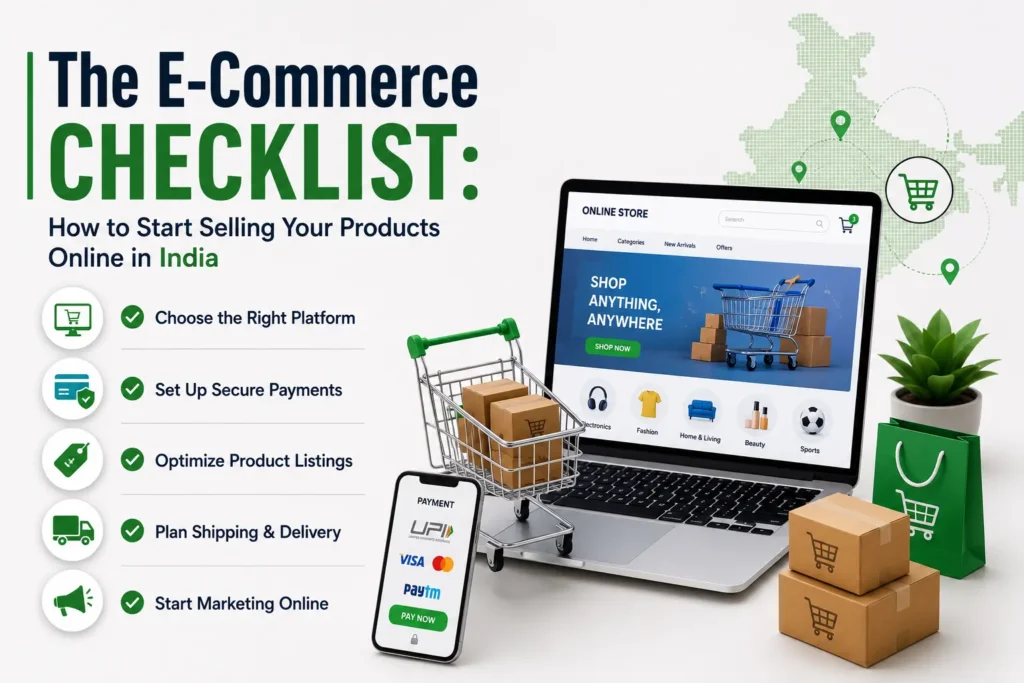
An e-commerce checklist to start selling online in India is your ultimate roadmap to capturing the massive surge in digital commerce across the country.
The way India buys has changed dramatically over the last decade. From groceries and fashion to handcrafted products and industrial equipment, customers today prefer the convenience of online shopping. With increasing internet penetration, affordable smartphones, digital payment adoption, and faster logistics networks, e-commerce has become one of the most powerful opportunities for businesses of all sizes.
Whether you are a startup founder, a local manufacturer, a retail store owner, a home-based entrepreneur, or an established brand looking to expand, selling online is no longer optional—it is a strategic necessity.
Many businesses jump into online selling without a proper plan, leading to poor sales, customer dissatisfaction, and wasted marketing budgets. This comprehensive e-commerce checklist to start selling online in India will guide you through every essential step required to successfully launch and grow your business.
Why Selling Online in India is a Game-Changer ?
Before diving into the detailed checklist, let’s understand why digital commerce is transforming businesses across India:
Reach Customers Beyond Your Local Market: A physical store limits your customer base to a specific neighborhood or city. An online store allows you to reach buyers across every pin code in India and internationally.
Lower Operational Costs: Compared to opening multiple physical retail outlets, an online store requires significantly lower capital while offering much broader market reach.
24/7 Sales Opportunities: Your online business remains open around the clock, generating orders continuously.
Better Customer Insights: E-commerce platforms provide valuable data about customer behavior, purchasing trends, and product performance to help you make smarter decisions.
Scalability: As demand grows, you can expand product lines, enter new markets, and increase sales without massive real estate overhead.
The 13-Step E-Commerce Checklist to Start Selling Online in India
Step 1: Define What You Want to Sell
The foundation of every successful online venture in this e-commerce checklist to start selling online in India is choosing the right products. Ask yourself:
- What products are in high demand?
- Who is my specific target audience?
- What problem does my product solve?
- What makes my product different from competitors?
Popular Product Categories in India :
- Fashion and Apparel
- Beauty and Personal Care
- Health and Wellness
- Home Decor
- Electronics & Mobile Accessories
- Handmade & Artisanal Goods
- Organic and Herbal Products
- Specialty Food & Snacks
Step 2: Register Your Business Properly
Professional businesses build trust. Indian shoppers are far more likely to buy from brands that appear legitimate and legally compliant.
Essential Registrations & Accounts :
Business Structure: Sole Proprietorship, Partnership, LLP, or Private Limited Company.
Tax Compliance: Obtain PAN, GST Registration (mandatory for selling across state borders and through payment gateways), and a Current Business Bank Account.
Intellectual Property: Secure Trademark Registration to protect your brand identity.
Step 3: Build a Strong Brand Identity
Executing an e-commerce checklist to start selling online in India requires more than stocking products—it requires memorable branding. Customers buy trust, credibility, and emotional connection.
Key brand elements include:
Brand Name: Simple, memorable, and reflective of your values.
Logo & Visual Identity: Professional visual assets set the tone.
Brand Voice: Define whether your tone is friendly, premium, professional, or traditional.
Packaging Design: High-quality unboxing experiences drive customer retention and social sharing.
Step 4: Create High-Quality Product Photos
Online shoppers cannot physically touch or examine products before buying. Your product photographs act as your primary salesperson.
Invest in professional product photography showing multiple angles (Front, Side, Back, Close-Up Details, Lifestyle Context, and Packaging Views). Professional visuals reduce return rates and increase sales conversions.
Step 5: Build Your E-Commerce Website
Your website is your digital showroom. Following an e-commerce checklist to start selling online in India means ensuring your site is optimized for performance, security, and mobile usage.
Key Website Features :
Mobile-First Design: Over 80% of online purchases in India happen via smartphones.
Fast Loading Speed: Websites that load under 3 seconds retain far more buyers.
Seamless Navigation: Clear product categories and accurate search filters.
Trust Signals: SSL encryption, customer reviews, clear return policies, and direct WhatsApp chat integration.
Popular Platforms: WooCommerce, Shopify, Magento, or custom web architecture.
Step 6: Set Up Payment Gateways
Indian buyers expect diverse and convenient payment options. Integrating a multi-channel payment gateway ensures higher conversion rates at checkout.
Offer checkout options including:
- UPI (GPay, PhonePe, Paytm)
- Credit and Debit Cards
- Net Banking across major banks
- Digital Wallets
- Buy Now Pay Later (BNPL)
- Cash on Delivery (COD)
Step 7: Organize Inventory Management
Inventory errors damage customer trust. Accepting orders for out-of-stock items leads to cancellations and negative reviews.
Establish real-time stock tracking, set automated reorder alerts, maintain safety stock levels, and audit inventory regularly to ensure smooth fulfillment.
Step 8: Partner with Reliable Logistics Providers
Fast and dependable delivery is critical to completing your e-commerce checklist to start selling online in India. Partner with courier aggregators or direct logistics services that offer broad pin-code coverage, real-time tracking, cash-on-delivery handling, and efficient return management.
Step 9: Create Compelling Product Descriptions
A great product description clearly outlines features, highlights direct benefits, and provides the emotional value of owning the product. Focus on how the item solves the customer’s problem rather than just listing technical specifications.
Step 10: Build Trust with Customers
Trust is the central currency of digital sales. Display real customer reviews, security badges, transparent refund and shipping policies, verified contact details, and active social media links across your online store.
Step 11: Launch Your Digital Marketing Strategy
Building a website is only half the battle; driving targeted traffic is what generates revenue.
Implement a multi-channel strategy including:
Search Engine Optimization (SEO): Rank organically for relevant product queries.
Social Media Marketing & Meta Ads: Engage target audiences on Instagram and Facebook.
Google Search Ads: Capture high-intent shoppers actively searching for your products.
Email Marketing: Nurture leads and drive repeat orders.
Step 12: Focus on Customer Experience
Deliver exceptional service by responding promptly to pre-sale inquiries, sending order tracking updates, resolving issues professionally, and offering hassle-free returns. Satisfied buyers naturally turn into brand advocates.
Step 13: Monitor Performance Metrics
Continuously track key performance indicators (KPIs) to optimize your store:
- Website Conversion Rate
- Average Order Value (AOV)
- Customer Acquisition Cost (CAC)
- Cart Abandonment Rate
- Customer Lifetime Value (CLV)
Common Mistakes to Avoid
When completing this e-commerce checklist to start selling online in India, ensure you avoid these costly mistakes:
- Using low-resolution or dark product photos
- Neglecting mobile responsiveness
- Overcomplicating the checkout process
- Hiding shipping fees until the final step
- Ignoring SEO and digital strategy
- Lacking clear refund or exchange policies
The Future of E-Commerce in India
India’s e-commerce ecosystem is expanding rapidly. With AI-driven personalization, voice search commerce, and social commerce platforms gaining momentum, businesses that establish a well-structured online presence today will lead the market tomorrow.
Cholanadu Takeaway
Launching an online business in India is no longer reserved for massive corporate entities. Today, even small businesses and regional entrepreneurs can build thriving direct-to-consumer (D2C) brands with the right strategy.
By applying this e-commerce checklist to start selling online in India—from business registration and custom web development to branding, visual design, and performance marketing—you build a strong foundation for sustainable digital growth.
Build Your Digital Storefront with Cholanadu
At Cholanadu, we empower businesses across India to turn their products into market-leading e-commerce brands. From WooCommerce development and strategic brand identity to conversion-focused UI/UX and digital marketing, our experts deliver end-to-end solutions tailored to your business goals.
Ready to launch or scale your online store? Visit the official Cholanadu Website to build a high-converting digital storefront today.
For official digital search standards and e-commerce guidelines, consult the Google Search Central E-Commerce Rules, or read our strategic guide on building a powerful Brand Identity for a Startup in Tamil Nadu.
