


Why Starbucks Customer Experience Makes People Pay More for Coffee ?
Why Starbucks Customer Experience Makes People Pay More for Coffee ?
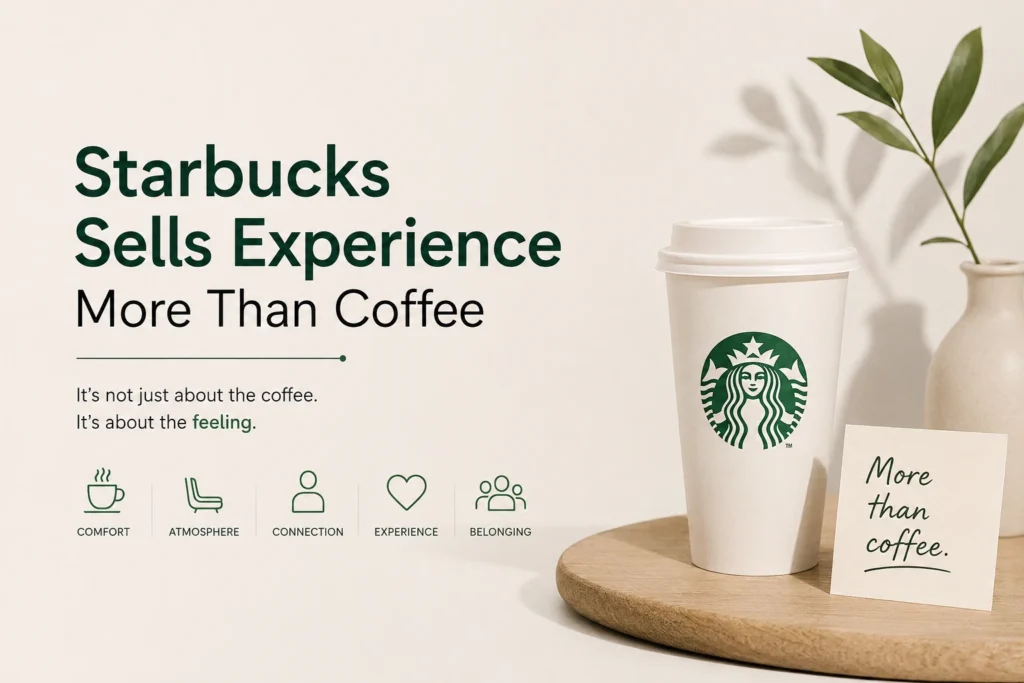
Ever wondered why people happily pay ₹300+ for a cup of coffee at Starbucks?
Is the coffee really that different?
Not entirely.
The real reason lies in the Starbucks Customer Experience a carefully designed atmosphere that makes customers feel comfortable, valued, and connected.
Instead of simply selling beverages, Starbucks sells emotions, lifestyle, comfort, and belonging.
That’s what makes the brand unforgettable.
If you enjoy reading about branding psychology and customer perception, you may also like this article on The Difference Between a Logo and a Brand.
What Makes the Starbucks Customer Experience Different ?
Walk into a Starbucks outlet after a long day.
The smell of freshly brewed coffee fills the space.
Soft music plays in the background.
The lighting feels warm.
Nobody rushes you to leave.
That feeling is intentional.
The Starbucks Customer Experience is carefully designed to create emotional comfort. Customers are not simply purchasing coffee they are purchasing a peaceful moment in a busy lifestyle.
According to Starbucks Official Website, the brand focuses heavily on human connection, atmosphere, and personalized service across its stores worldwide.
That emotional connection becomes more powerful than the product itself.
Starbucks as the Third Place
One of the biggest reasons behind the success of the Starbucks Customer Experience is the idea of being the “third place.”
Home is the first place.
Work is the second place.
Starbucks becomes the third place a comfortable environment between personal and professional life.
Customers visit Starbucks to:
✔ Work remotely
✔ Attend casual meetings
✔ Spend quiet time alone
✔ Read books
✔ Relax between hectic schedules
The coffee may start the visit.
But the environment makes people stay longer.
Modern branding is no longer only about products. It is about how customers emotionally connect with a space, a service, or a story.
That is also why businesses today focus heavily on brand identity and emotional positioning. You can explore more about branding strategy on Cholanadu Branding Services.
How Personalization Builds Customer Loyalty ?
Have you noticed how Starbucks asks for your name while placing an order?
It may sound simple, but personalization creates emotional attachment.
Instead of feeling like “another customer,” people feel recognized.
That small interaction becomes part of the Starbucks Customer Experience.
Customers remember how a brand makes them feel far more than what the brand sells.
This is one of the strongest psychological principles in marketing and customer retention.
Even global brands use emotional personalization to improve loyalty and repeat purchases. A report published by Forbes explains how customer experience and personalization directly influence modern buying behavior.
The Social Media Influence of Starbucks
Be honest.
How many times have you seen Starbucks cups on Instagram?
People rarely post ordinary coffee.
They post experiences.
The logo, the packaging, the café interiors, and even the cup design are built to feel aesthetically pleasing and socially shareable.
The Starbucks Customer Experience extends beyond the café itself.
Customers unintentionally become marketers whenever they post photos online.
This creates free brand visibility and social proof.
Today’s customers do not only consume products.
They consume identity, status, and experiences they can share with others.
That is the power of emotional branding.
Why Experience Branding Works ?
When people think about Starbucks, many words come to mind:
☕ Comfort
☕ Lifestyle
☕ Community
☕ Relaxation
☕ Premium Experience
Coffee is often not the first thing customers mention.
That is exactly why the Starbucks Customer Experience became one of the strongest branding examples in the world.
If Starbucks only sold coffee, it would compete with thousands of cafés globally.
Instead, it positioned itself as a lifestyle brand.
And lifestyle brands create stronger emotional loyalty than product-based businesses.
Branding Lessons Businesses Can Learn
Whether you run a café, retail store, salon, restaurant, or online business, there are powerful lessons to learn from the Starbucks Customer Experience.
Ask yourself:
- How do customers feel when interacting with my brand?
- Does my business create emotional comfort?
- Is my customer experience memorable?
- Would customers miss my brand if it disappeared tomorrow?
Businesses that focus only on products often struggle to build long-term loyalty.
Businesses that focus on experiences create emotional connections.
That emotional connection becomes the real competitive advantage.
You can also explore how branding impacts business growth in this article from Harvard Business Review, which discusses customer loyalty and brand perception in modern markets.
Final Thoughts
The biggest lesson behind the Starbucks Customer Experience is simple:
People may visit for the coffee.
But they return for the feeling.
Starbucks sells comfort.
It sells belonging.
It sells lifestyle and identity.
And that emotional experience is what makes customers willingly pay more.
In today’s competitive market, products alone are no longer enough.
The brands that win are the ones that create memorable experiences people emotionally connect with.
What about you?
Would you visit Starbucks only for the coffee, or for the complete experience?
Share your thoughts in the comments and join the conversation.
