


Why Maggi Became More Than Just Noodles in India ?
What Makes Emotional Branding Powerful ?
Most brands sell products.
But the most successful brands sell emotions, memories, and experiences.
That is exactly what emotional branding in India looks like.
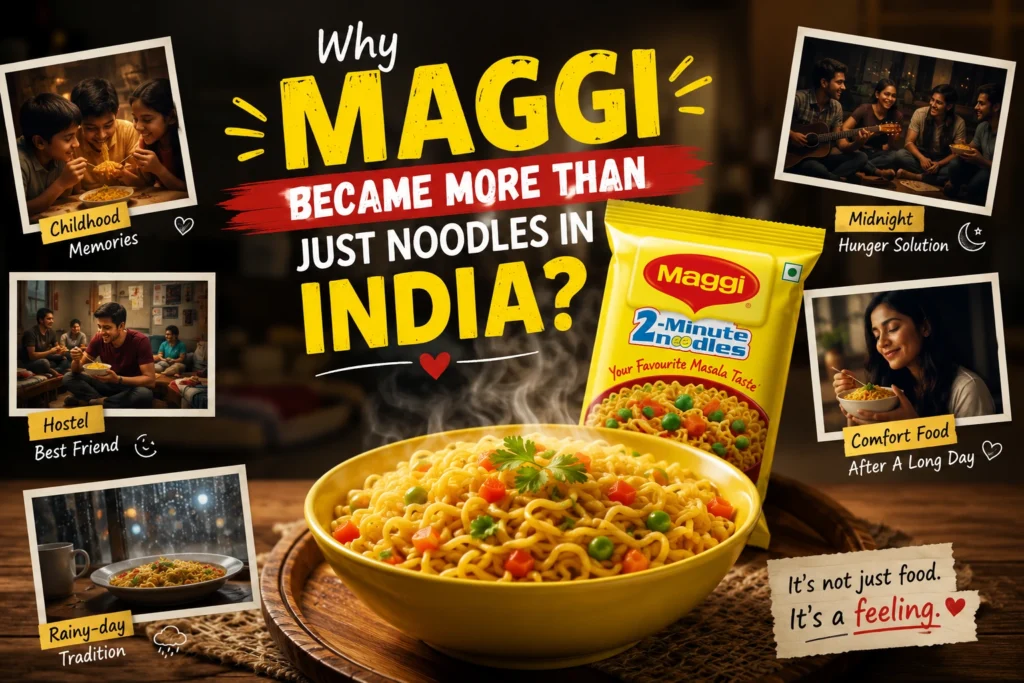
Instead of simply promoting noodles, Maggi slowly became connected to:
- Childhood memories
- Rainy evenings
- Hostel life
- Family bonding
- Late-night conversations
Today, businesses across India are trying to understand how emotional storytelling creates stronger customer loyalty.
If you enjoy reading about branding, marketing, and consumer psychology, explore more insights on Cholanadu Digital Branding Blog.
India Didn’t Just Eat Maggi — It Adopted It
When Maggi entered Indian homes, it introduced something very different.
Traditional Indian cooking was usually associated with:
- Homemade recipes
- Time-consuming preparation
- Fresh ingredients
- Family cooking traditions
Then came a product that promised:
“Ready in 2 Minutes.”
That convenience instantly stood out.
But the real success came from how Maggi adapted emotionally to Indian culture instead of behaving like a foreign brand.
This is one of the strongest examples of emotional branding in India because the product became part of daily life rather than just another packaged food item.
According to Harvard Business Review on Emotional Branding, emotional connection plays a major role in long-term customer loyalty.
Emotional Branding in India Through Nostalgia
Every Indian seems to have a personal Maggi memory.
Some remember:
- Eating it after school
- Cooking secretly at midnight
- Sharing it with siblings
- Eating roadside Maggi during trips
- Hostel room cooking experiments
This emotional memory-building is what makes emotional branding in India so powerful.
People rarely remember product features for years.
They remember feelings.
And Maggi became deeply connected to those feelings.
For brands trying to build stronger customer relationships, emotional storytelling matters more than aggressive selling.
Businesses today increasingly focus on branding strategies similar to this, especially in digital marketing and consumer engagement services like those offered by Cholanadu Media Corporation.
The Hostel Relationship Was Legendary
For Indian college students, Maggi became more than food.
It became survival.
Low budget? Cook Maggi.
Late-night assignment? Cook Maggi.
Missing home? Definitely cook Maggi.
This emotional dependency helped strengthen emotional branding in India because the brand became attached to important life experiences.
Interestingly, for many students, Maggi was their first cooking experience.
Simple preparation made it emotionally approachable.
That simplicity created familiarity — and familiarity creates trust.
Indians Customized Maggi in Their Own Style
Another reason Maggi succeeded in India was flexibility.
People added:
- Onion
- Tomato
- Butter
- Egg
- Cheese
- Chicken
- Extra masala
Suddenly, every family had its own Maggi recipe.
That personalization helped the brand feel local everywhere.
This teaches an important branding lesson:
Customers emotionally connect more strongly when they can personalize an experience.
Modern brands now apply similar strategies in digital branding, website experiences, and product storytelling to improve customer retention.
You can explore more branding and marketing strategy articles at Cholanadu Branding Insights.
Comfort Food & Consumer Psychology
Psychologists often explain that comfort foods become emotionally important because they connect strongly with memory and routine.
Maggi mastered this perfectly.
The smell.
The masala flavor.
The steam from the bowl.
All of these trigger emotional familiarity.
According to Psychology Today on Comfort Food Psychology, comfort foods often create emotional security because they remind people of positive life experiences.
This emotional familiarity is one of the strongest foundations of emotional branding in India.
Maggi Became Part of Indian Pop Culture
Eventually, Maggi stopped being just a kitchen product.
It became part of Indian pop culture.
The brand appeared in:
- Social media memes
- Travel vlogs
- College jokes
- Hill station cafés
- Movie references
Today, “Maggi Points” in hill stations have become travel attractions themselves.
Very few brands achieve this level of cultural integration.
This is why emotional branding in India matters — people remember brands that become part of their lifestyle and identity.
The 2015 Ban Proved Emotional Loyalty
When Maggi temporarily disappeared from Indian stores in 2015, people reacted emotionally.
Social media discussions exploded.
Customers genuinely missed the brand.
And when Maggi returned, people welcomed it back enthusiastically.
That moment proved something important:
Maggi had moved beyond product loyalty into emotional loyalty.
For businesses, this is the ultimate branding achievement.
Customers stay loyal not only because of quality — but because of emotional attachment.
Marketing Lessons Brands Can Learn from Maggi
Maggi’s journey offers valuable lessons for businesses trying to build emotional branding in India.
1. Sell Feelings, Not Just Products
Customers remember emotions longer than features.
2. Simplicity Creates Familiarity
Simple products often become easier to trust.
3. Emotional Storytelling Builds Loyalty
Stories create stronger customer relationships than advertisements alone.
4. Cultural Connection Matters
Brands succeed faster when they feel relatable to local audiences.
Businesses focusing on digital branding and emotional storytelling often build stronger online communities and customer engagement.
Final Thoughts
Maggi’s story in India is not really about noodles.
It is about emotional connection.
A simple food product became associated with:
- Childhood
- Family moments
- Hostel memories
- Rainy evenings
- Comfort and familiarity
That is why Maggi became one of the best examples of emotional branding in India.
And for modern businesses, the lesson is clear:
People may buy products first.
But they stay loyal because of emotions.
