


GAP’s 6-Day Logo Fiasco – A Deep Dive into How Ignoring Brand Emotion Backfired
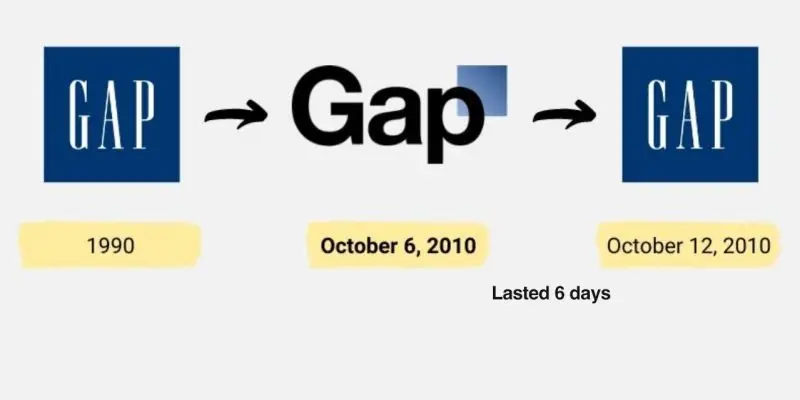
In branding history, few moments illustrate the consequences of emotional misalignment as dramatically as the GAP rebranding failure of 2010. What was intended to be a modern visual refresh rapidly devolved into one of the most widely mocked and publicly rejected corporate decisions ever made. The new logo survived only six days, becoming a global case study in brand backlash, identity misalignment, and consumer outrage.
Below is an in-depth breakdown of how this branding disaster unfolded, why it triggered such intense reactions, and what strategic lessons every modern brand must learn.
1. A Sudden Logo Change That Ignited Global Backlash
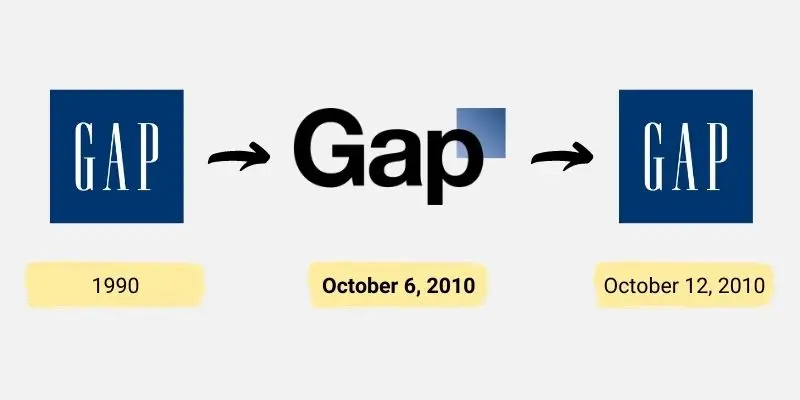
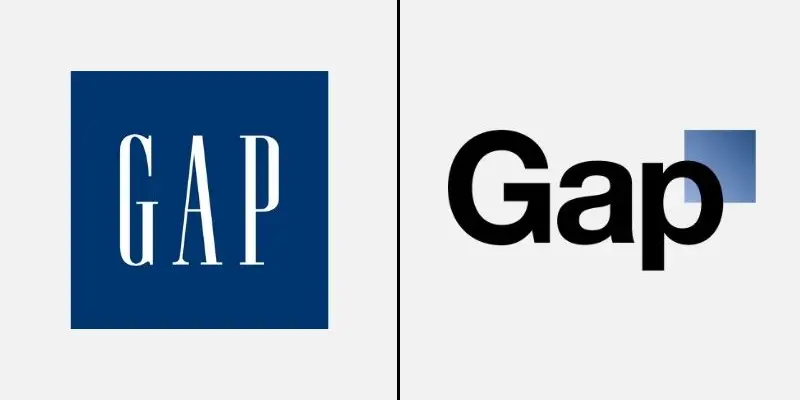
On October 6, 2010, GAP abruptly unveiled a redesigned logo without announcement, explanation, or strategic rollout. Their iconic blue box, long synonymous with mall culture, American denim, and 90s retail nostalgia, was suddenly replaced with a stark Helvetica wordmark paired with a small gradient square.
- There was no press release.
- No marketing buildup.
- No customer communication.
- No brand audit to assess audience sentiment.
This unceremonious switch triggered an immediate brand perception crisis. To customers, the sudden change felt like an erasure of decades of emotional equity.
Key Missteps in GAP’s Visual Overhaul
| Branding Element | What GAP Did | Why It Failed |
|---|---|---|
| Communication Strategy | No announcement or rollout | Ignored audience expectation and emotional connection |
| Customer Sentiment Analysis | No brand audit | Overlooked deep nostalgia associated with the original logo |
| Design Direction | Generic Helvetica + random gradient box | Seen as clip-art, corporate, and creatively disconnected |
| Engagement Strategy | No community involvement | Made loyal customers feel excluded and undervalued |
| Crisis Response | Crowdsourcing after backlash | Appeared desperate and directionless |
2. Why Customers Reacted with Intense Emotional Backlash
The negative response was not just about aesthetics—it was an emotional disconnect. GAP underestimated how deeply consumers had tied their personal experiences, memories, and identities to the classic blue box.
Key Drivers of the Public Rejection
- Customer Betrayal:
Shoppers associated GAP with childhood malls, back-to-school shopping, and early 2000s culture. Removing the logo felt like rewriting their memories. - Design Criticism:
Designers worldwide labelled the new logo as uninspired, low-effort, and corporate. Memes flooded social platforms within hours. - Amplified Social Media Outrage:
Facebook and Twitter accelerated the backlash into a global conversation. The backlash itself became a trending cultural event. - Brand Authenticity Loss:
The redesign felt like GAP was abandoning its heritage to chase a forced modernity.
This was more than a marketing misstep—it was a complete emotional misreading of audience loyalty.
3. The Real Failure: Lack of Strategic Understanding, Not Design
Many brand analysts agree that the new logo could have succeeded—if it had been backed by narrative, research, and context. The design itself was not catastrophic; the execution was.
GAP committed three fatal branding errors:
- ⛔ No brand audit
No study of consumer sentiment. No emotional value assessment. No qualitative research. - ⛔ No storytelling
A logo change must reflect evolution, purpose, and renewed values. GAP provided none. - ⛔ No community involvement
For a legacy brand, customers expect transparency and consultation, not silent replacement.
These miscalculations created a massive disconnect, where the brand’s internal identity vision collided with customer expectations.
4. Why the New Logo Failed to Resonate with the Market
Although the redesign wasn’t technically flawed, it simply didn’t match the spirit, culture, or heritage of GAP as a lifestyle brand.
Key Reasons for Design Misalignment
- Too corporate for a casual retail brand
Helvetica and a floating gradient square appeared sterile and impersonal. - No link to brand heritage
GAP’s charm has always been tied to simplicity, comfort, and American culture. - Lack of warmth or emotional cues
The logo lacked the cozy familiarity that long defined the brand. - Felt rushed and creatively shallow
The public perception was that it resembled stock art or a default design template.
This creative disconnect made the new identity feel hollow and disconnected from GAP’s authentic essence.
5. The Six-Day Collapse: A Public Relations Turning Point
- By Day 2, global mockery was widespread.
- By Day 4, branding experts called it the worst rebrand in modern history.
- By Day 5, GAP made a desperate move: opening a public crowdsourcing contest for ideas.
This attempt worsened perceptions, signaling strategic oversight and a lack of internal clarity.
Finally, on Day 6, GAP issued a statement:
“We’ve heard loud and clear that you’re passionate about our blue box logo.”
The company reverted to the original logo—one of the fastest reversals ever recorded in corporate branding.
This was not just a design retraction; it was the brand acknowledging that identity must reflect emotional truth, not managerial preference.
6. Major Branding Lessons from the GAP Identity Crisis
Every modern organization—regardless of size—can extract powerful insights from this branding disaster.
✔ A logo is not just a design—it’s a relationship
Visual identity carries memory, meaning, and emotional resonance.
✔ Never initiate a rebrand without a brand audit
Consumer sentiment and perception data must guide creative direction.
✔ Communicate transparently before making changes
Narrative-driven branding ensures audiences understand evolution, not disruption.
✔ Respect brand heritage
Innovation must extend roots, not cut them off.
✔ Avoid using visual change as a fix for deeper issues
GAP’s declining market performance stemmed from internal challenges, not its logo.
These principles remain essential in a market where customers value authenticity more than novelty.
7. Why GAP’s Rebrand Remains a Case Study in Branding Disaster
The GAP rebranding failure stands as a global reminder that brand authenticity, consumer expectation, and emotional connection drive modern branding success. A logo is more than art—it is a symbol of trust.
GAP’s six-day collapse proves that customers protect the brands they love, and any transformation that ignores their sentiment will face public rejection.
The fiasco was not caused by a font, a box, or a gradient.
It was caused by a brand forgetting to listen.
Final Thoughts
GAP’s 2010 visual overhaul remains one of the clearest lessons in branding history:
Brands evolve successfully only when their communities feel acknowledged, respected, and emotionally understood. A logo must represent heritage and future vision simultaneously—without breaking the bond customers hold.
When a brand disregards this connection, even a single design change can ignite a global backlash.
